Weather Forecast River Levels FB Twitter Instagram Pinterest

(208) 634-4303 | RIVERBEAT BLOG

SIX OR TWELVE DAY RIVER ADVENTURES

MIDDLE FORK AND MAIN SALMON RIVERS, IDAHO

Category Archive: Salmon River Rafting

  1. Understanding the whitewater scale

    Comments Off on Understanding the whitewater scale

    What does it all mean?

    There are thousands of rivers around the globe with varying characteristics. In the 1950s, river running became popular as a recreational sport and it was deemed necessary to devise a system that would differentiate between the varying levels of difficulty, that rivers presented. A class system of VI was hatched by the American Whitewater Association. Given that the characteristics of rivers are the same, despite where the river is located, it was agreed upon that a scale should be instituted. Thus the whitewater scale was born. The Class I-VI scale took hold and has been used internationally, ever since. The design of the scale was based on technicality and consequence. For an in-depth explanation of the different classes visit the International Scale of River Difficulty.

    The whitewater scale is meant as a general idea.

    The whitewater scale was not designed with the expectation that the rating of a rapid or a river would ever be set in stone. As the river flows and changes so do our interpretation of the class system. What one boater thinks is a solid class III, another may think is an IV-. These opinions stem from varying levels of skill and experience. Also, rivers’ characteristics and variables change with time, natural events and volume.

    Things that cause the ratings to change.

    As a river rises and drops, the technicality of the rapids change, sometimes becoming easier and sometimes becoming harder. There are also variations in the rating system based on whether a river is a high volume river or a low volume river. A class III high volume rapid may have big waves and strong eddy lines as obstacles. A low volume class III rapid may have rocks and pour-overs as obstacles. Spring runoff or volume change may cause a rapid or an entire river stretch to change ratings on the scale by one or two whole numbers. The length of a rapid or of a stretch of river with a series of rapids linked together can dictate it’s placement on the whitewater scale. And water temperature and the location or remoteness of a river are factors as well.

    The addition of ‘plus and minus’.

    Because of the wide range of variables crammed into a small set of numbers, the + and – were added, to indicate whether a rapid or river stretch was on the easier side or the more challenging side of the scale.

    In the Grand Canyon, a scale of 1-10 was created before the AWA developed the I-VI scale. Their thought was by having more numbers it would be easier to describe the difficulty of the rapid more accurately, thus using a number description instead of using a plus or a minus. Because of the history attached to the 1-10 scale, Grand Canyon has chosen to continue using this system.

    What is CFS? Why are some rivers measured in FEET?

    Most rivers are measured in ‘cubic feet per second’ (CFS), which is the depth x width x speed, a volume reading. The gauge is a fancy little contraption that spins around in the water to gauge the speed at a set point in the river where the depth and width are pre-measured. The Middle Fork and a few other rivers are measured in feet, in which the gauge is a measuring stick in the water at a set location with markings on it like a ruler. The handy aspect of this method is you can float by the gauge and visually see what level the river is at. With CFS, the gauge is digital and the information is sent via a transmitter to the internet at which point the public can view the current flow.

    Why is the Middle Fork of the Salmon measured in feet?

    Along its journey, the Middle Fork gains volume from over 100 tributaries which causes a change in the CFS regularly, sometimes 2 or 3 creeks within 100 feet of each other. As a result, in its 100+ mile journey, the CFS can range from 1,000 to 15,000. So if the gauge was at the beginning of the river it would not accurately reflect the CFS at the end of the river and vice versa. Because of this fact it is more user-friendly to measure the river in feet. With this method, the characteristics of the river can be learned according to where the river falls on the feet gauge even though the volume is growing as one travels downstream.

    All wrapped up…

    As you can see there are a lot of variables. Volume, location, length, water temperature, etc.  Sometimes a class II can feel like a class V. There is no black and white, given that opinions, skill level, and mother nature are all players in the game.

  2. 7 Reasons why your kids need a river trip

    Comments Off on 7 Reasons why your kids need a river trip

    And why YOU need one too!

    Camping:

    Spending time outside is the best thing we can give ourselves in today’s world of computers and smartphones, Netflix and Amazon Prime, Play station and Wii. Outdoor activities fuel the imagination and foster creativity. Today, KIDS NEED THIS MORE THAN EVER! They need to learn how to pitch a tent, sleep on the ground and play in nature without the distractions of i-pads and video games. Invaluable skills are gained by sharing space with other people, learning to work together and being considerate of others. Camping gives us the opportunity to realize how little we really need, to be comfortable and happy. It also gives us time and space to get in touch with ourselves and each other, unhindered by the busyness of modern life.

    Nature:

    Mother nature provides endless excitement through weather, beauty and fun opportunities. Elk, Deer and Big Horn Sheep roam the hillsides while Mink, Martin and Otter frolic in the river or peruse the shore. Eagles, Osprey, Falcons, and Hawks soar through the sky on the perpetual hunt, while King Fishers and shorebirds, flit about, looking for their next tasty meal. Wildflowers color the hillsides and fill the air with wonderful smells and the Geology changes around every corner.

    Playing in the water:

    What kid doesn’t like to play in water?  The river is all about water, morning, noon and night. During the day there are endless opportunities for kids to jump off of rafts and rocks, to have water fights and to swim. Alongshore there are beaches, pools, logs, rocks, and waterfalls. The river is like Mother Nature’s waterpark!

    Playing in the wilderness:

    When it’s time to dry off, the wilderness beckons. Stoic Ponderosa and Douglas Fir pines line the banks of the Salmon, while Huckleberries and Thimbleberries hide in the bushes. Ferns and Wild Prim Rose make for creative props in games and charades. Fallen logs and branches are just yearning to be built into forts, and sticks can’t wait to be a sword or a wand. An outdoor classroom, full of exploring, playing and creating!

    Learn new sports:

    A great place to try out new river sports is on a pool and drop river that’s rated class II-III, like the Main Salmon. The characteristics of a pool and drop river, provide for stretches of flat water with intermittent rapids. Class II-III whitewater is friendly and safe and a great place for beginners and intermediates to try out different types of crafts. Popular today are Stand Up Paddle Boards (SUP) and Inflatable Kayaks (IK). Hone your skills through the flat water and test your skills through the rapids. Other options include building your teamwork skills on the paddle raft or testing your strength and coordination on an oar raft. And if you are really feeling brave, be one with the river and swim a rifle in your PFD (life jacket).

    Social skills:

    What a better place to learn social skills than living with 30 people for 6 days on the river. As a sort of tribe, we move down the river, exploring, eating, playing and camping. It’s a great opportunity to learn about compassion, sharing, personal space, privacy, and appreciation.

    Unplugged from technology:

    Is it easy to just let the kids put on a program, watch cartoons or play video games? Do you feel guilty about allowing this more often than you’d like too? Well, you can change that, at least for a week or two on the river. The beauty of river trips is there is NO CELL SERVICE, which means NO INTERNET EITHER. There’s also no electricity, so the natural world takes over.

    IMAGINE….. campfire stories, star gazing, slumber parties, fort building, sand castle building, beach games, yard games, dress up and performances, water fights….all in lieu of digital entertainment.

     Immerse yourself and your kids in NATURE!

    More about the Main Salmon River


  3. 5 Reasons-Main Salmon-Perfect Family Vacation

    Comments Off on 5 Reasons-Main Salmon-Perfect Family Vacation

    The Main Salmon….your next family vacation!

    Here are a few reasons why…

    Huge Beaches:

    The Main Salmon is a high volume, free flowing river. It’s journey begins in the Saw Tooth Mountains outside of Stanley, Idaho and travels 425 miles to it’s confluence with the Snake River. Along the way it picks up sediments (with it’s high volume) and then deposits them, creating huge white sandy beaches. Most camps have enough beach to play any number of games or sports, including ultimate frisbee, football, volleyball, building sandcastles and having splashy fights . These wonderfully large beaches also provide for great camping with riverfront camp sites.

    Hot springs:

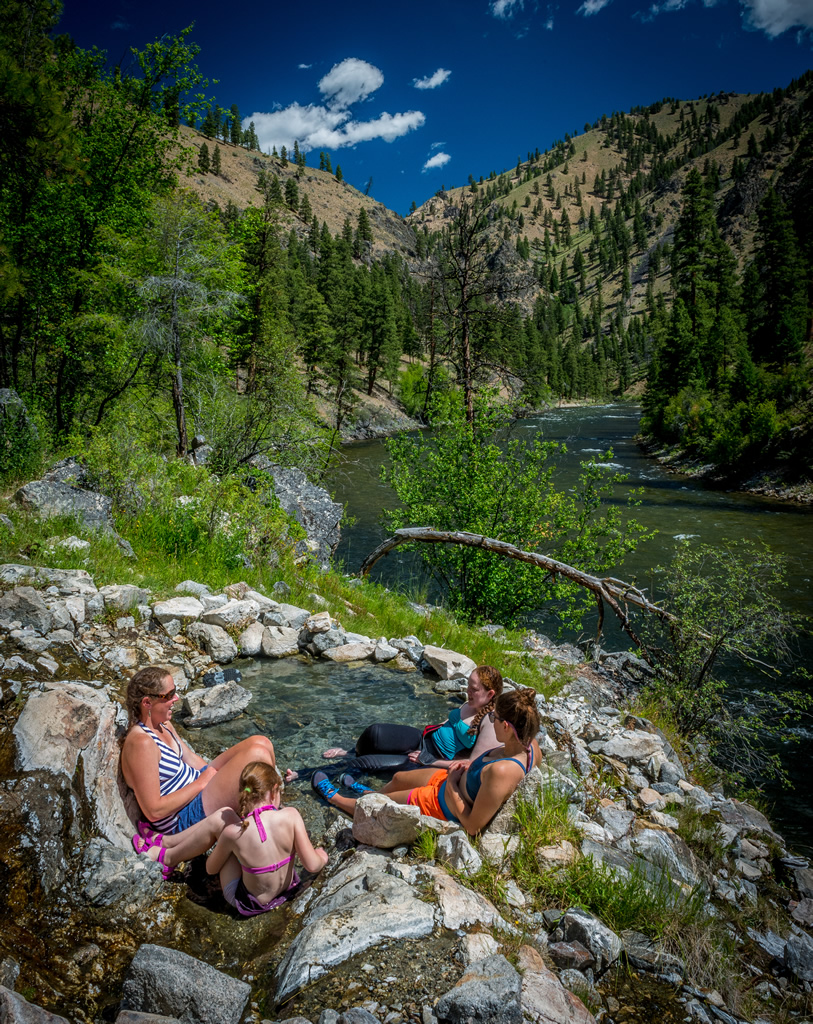
    Along the rivers edge, natural Hot Springs bubble out of the ground as the water is pushed up from deep in the earth where it has been heated by magma or steam. River runners throughout time have constructed pools that are still used for soaking. There is nothing better than treating yourself to a soak, in the middle of the wilderness. Curious about how hot springs form? Check out Idaho Geology.

    Friendly whitewater for all crafts….pool toys included:

    Classified as a “pool and drop” river, the Main Salmon provides endless fun for all types. “Pool and Drop” translates as a river with a calm pools above and below the rapids, allowing for preparation and recovery. Whether you’re a Kayaker, Stand Up Paddle boarder, Canoeist or Newbie, this river is as friendly as whitewater gets. Class 2-3 whitewater is perfect for starting out, trying new crafts, honing your skills, surfing, pushing yourself and ultimately becoming one with the river.

    Rich Human History:

    Humans have been calling this region their home for upwards of 10,000 years. Along the journey, one has the opportunity to view pictographs, paintings left on the rock faces by various Native American tribes that frequented the area. Miners settled in the area in the 1800’s and left behind evidence of their inhabitance. Settlers claimed homesteads, planted orchards, gardened, hunted and made a life for themselves here. Some of the homesteads are still inhabited today by modern day pioneers. You may even get the chance to check out one of these off-the-grid, modern day sustenance lifestyles.

    Hiking:

    The Salmon river drainage is one of the deepest drainages in North America which provides for some amazing vistas. Having been a mining territory during the age of Gold Rushes, there are hundreds of trails bisecting the wilderness. Most camps have trails to explore or you can bring your gators and head up the hill true bushwhack style.

    In a nut shell:

    As you can see it’s as though the Main Salmon was made for families. The age limit for kids is 6 and older. The rapids are mostly class 2-3 (friendly). Camps are big and provide land based or riverside activities galore! There are many different types of crafts for everyone to try out, on the flat water stretches or through the rapids. The water is warm and summer time temps are quite pleasant. There is no internet or phone service, therefor everyone is disconnected from technology and present in the moment with each other. At night, the campfire instigates story telling and music. And when the day is done, starlight or moonlight shadows illuminate your way to bed.

    IMAGINE….you and your family here!

    IT’S A GEM!

  4. Fear Factor

    Comments Off on Fear Factor

    Isn’t rafting dangerous?

    I have been guiding for 20 years and one of the most common comments I receive when I tell people what I do for a living is “Isn’t rafting dangerous?”. What do I say…. “Isn’t driving a car dangerous?”.

    Sure, there is an element of risk involved with recreating on water because it’s water, a very powerful force of nature. But isn’t there an element of risk in riding a bike or going skiing or getting in a car or on a plane or swimming in the ocean? Life is full of risks and we all take them every day. But when you do something with regularity it looses it’s risk factor because you get comfortable in knowing what to expect. The element of unknown is removed thus instilling a certain level of comfort.

    Dispelling the myth…..

    For those of us who spend our lives on the river, getting in a car seems way more dangerous than getting on a boat, because we know the inherent risks of both. On the river you are moving at most 12 MPH. You can pull over and walk or opt out at almost any given moment and you can take calculated risks that may at worst, result in swimming in a life jacket, which if your are smart, should be rated to float your person properly for the given situation. In a car you can go upwards of 100 MPH and are trusting all of the other drivers on the road to be paying 100% attention to what they are doing. DRIVING! Who pays 100% attention to driving, when driving anymore? Especially with all of the distractions at hand, such as smart phones, music, dvd’s, other people, scenery, etc. SCARY!!!

    Of course there are stretches of rivers that ARE dangerous given the characteristics they hold. But there are safety standards in place when it involves paying clientele. Class V is the highest level run commercially (on a scale of I-VI) and that does not include all class V’s, just the ones deemed safe enough to operate on. There is a minimum rated PFD (Person Floatation Device), (no not PDF), required on commercial river trips. A type V commercial PFD is designed to float an unconscious person face up. All guides are required to have first aid and CPR training. Most companies require their guides to take Swift Water Rescue Training, a course designed to give guides the skills they need to respond to any incident that should occur.  And there is a hierarchy of guides with a leader in place. This said…

    …. is rafting dangerous? About as dangerous as most other things people do on a daily basis.

    Don’t believe the hype…

    The headlines that give river running a bad rap don’t always tell the whole story. 99.9% of the incidents that occur on a river involve the lack of proper attire i.e. a PFD, poor health and poor choices by that person.

    So….if you were to ask me again “Isn’t rafting dangerous?” I would have to say no, not really, I mean sure it comes with some inherent risks but what in life doesn’t? If you choose to go rafting with a commercial company, you will be in the hands of Professionals. Guides are people who have chosen this lifestyle because of all of the joy it brings. Adrenaline and serenity intertwined, the river recharges you and gives you an opportunity to unplug and be raw in your own skin and act like a child if you wish. It’s challenging and fun and makes you feel giddy with excitement. It’s Mother Nature at her finest. She is in charge and not afraid to let you know when your ego is getting the better of you. And at the end of the day you will feel renewed, rejuvenated and full of respect. So…

    Fear not and take the plunge!

  5. Bucket List…5 reasons the Middle Fork of the Salmon should be on yours

    Comments Off on Bucket List…5 reasons the Middle Fork of the Salmon should be on yours

    The Bucket List defining factors.

    Hotsprings:

    Can you say the most amazing gift from Mother Earth, HOT WATER bubbling out of the ground? Bucket List…..check! The Middle Fork hosts 6 natural hot springs within a 1/2 mile of it’s banks. Some of these can hold up to 20 people and vary in temps of 100 to 115 degrees F. And to boot, they are full of natural minerals that induce relaxation and promote healing.

    Waterfalls:

    With over 100 tributaries flowing into the Middle Fork of the Salmon, some are bound to cascade over cliffs. Numerous waterfalls cascade into the Middle Fork the entire length of the journey ranging in heights of up to 200 feet.

    Constant Gradient:

    The Middle Fork looses 3000′ in elevation in it’s 96 mile trip from Boundary Creek to the Confluence with the Main Salmon. This provides continuous busy water and rapids. For those who like to kayak, IK, SUP or Open Boat, there is every kind of surf from smooth and graceful to stomping and thrashy.

    World Class Fishing:

    There is trophy fishing galore in this world class trout fishery. Mandatory catch and release guarantees healthy populations of Western slope Cutthroat, Rainbow, Steelhead and the endangered and protected Bull and Dolly Varden trout. Sparkling eddies line the banks, boulders fill the channels and deep clear pools are scattered along the river, inviting your line to lay down and hook a beauty.

    Wilderness:

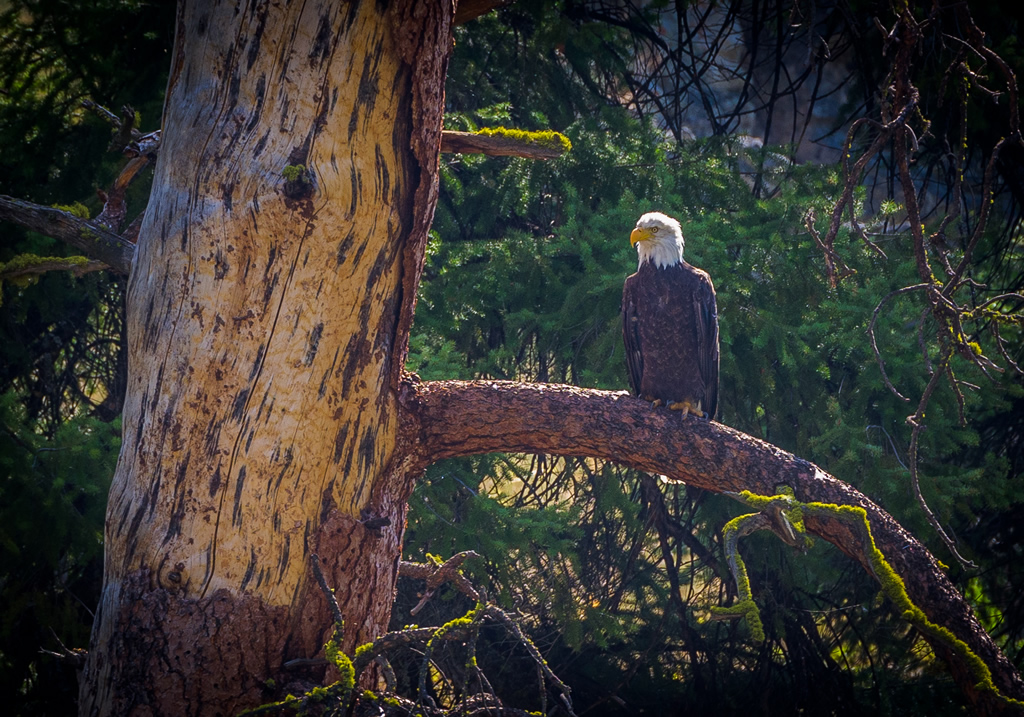
    2.3+ million acres of roadless wilderness. Old growth ponderosa pines with beautiful orange bark and a rich vanilla scent, aging 400-600 years old, line the banks and stand guard in camps that have hosted humans for 100’s or possibly 1000’s of years. Wildlife ranging from Snakes to Moose, Black Bear, Wolves, Mountain Lions, Big Horn Sheep, Mountain Goats, Bald Eagles, Osprey, Elk, Deer, Ducks, Otter and Minks, just to name a few. Starry nights with no light pollution and springs with fresh water that you can drink strait from the Earth.

  6. A day in the life of…..

    Comments Off on A day in the life of…..

    A day in the life on the Middle Fork of the SalmonMain Salmon

    A typical day on the river…….

    Wake up call.

    What? Birds chirping, water gurgling, the sounds of your fellow river trippers waking up. NO ALARM CLOCK! Ummmm the smell of fresh coffee and? Could it be? The smell of BACON?

    And so the day begins. Rise and Shine. Another beautiful day awaits, full of adventure and scenery that leaves you stunned. This is the Middle Fork of the Salmon!

    Unzip your cozy sleeping bag. Slip on those comfy camp shoes. Don your puffy. Slip out of the tent. Welcome the day, arms stretched out, big deep breath, ahhh the fresh mountain air!

    Morning fire? Really? Can you say luxury. When was the last time you sat around a camp fire in the morning, enjoying a cup of delicious coffee and Fair Trade to boot……Whoa karma points? Breakfast to order? Eggs to order? Yes please!

    Ok time to pack for the day but first…. a quiet moment.

    Prep for the day.

    Now, pacamping Idahock it up. Warm jacket, rain jacket, sunscreen, camera, sarong, long sleeve shirt, swim gear, splash gear, socks, sun hat, packed in the day bag, check! Now stuff the rest in the big bag, add sleep gear and the checked bag is ready to go. Down with the tent. Take everything down to the boats. Oh good, just in time for morning blurb. What will today have to offer? Oooo more fun rapids? A stop at a hot springs. Some pictographs left here by the Shoshone-Bannock Sheep Eater Indians. Goddess wraps for lunch! Dang, I feel like a goddess! Delicious food prepared by wonderful guides, scenery that makes your jaw drop, multiple boat choices, flexibility in all aspects of every day, sight seeing, interpretive talks……Stop it Canyons!!!
    Camp Life.

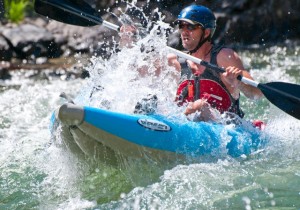
    Inflatable KayakWell, after a morning in the paddle raft and an afternoon in the IK (a.k.a. DUCKIE) it’s time to kick back with a cold one or perhaps a glass of wine, hummmm, which will it be tonight? Having found the perfect camp spot, the tent is set up. Nestling into the comfortable camp chair, thoughts of home completely vanish as the sounds and sights of this wonderful place take over. A crackling fire, folks playing games, laughter, the aromas of yet another 5 star meal and the warm colors of sunset caressing the hills, can it get any better? What? Live music? Story telling? No way!!!

    firesideExhausted from an amazing day, bed sounds great. With no threat of rain the fly comes off. Snuggled into a warm sleeping bag with a million stars twinkling over head, sleep takes over!
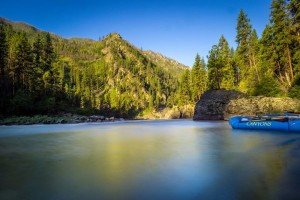
    What an awesome day! Was it all just a dream?

  7. River toilet….Feelin’ GROOVY!

    Comments Off on River toilet….Feelin’ GROOVY!

    You want me to poop in what?

    A box? A groover? Say what?

    What is a GROOVER?

    Main Salmon river tripThat character from sesame street? No silly, a groover is a river toilet. Some people call them Johnnies, some call them the shitter and some call them the ‘groover’. The name groover originates from trips operating back in the ’70s. You see, back then and for some companies, today, a 20 MIL rocket box is what you use to poop straight into. Military rocket boxes are watertight, in theory, which is a good system for holding our waste. In the event that a boat should flip and it’s carrying the poop, we don’t want there to be any leakage. Now back in the 70’s when folks were figuring these systems out, no one thought to bring a toilet seat, so when you sat down to, you know poop, you just sat down right on the can and when you were done you were decorated with two nice grooves down the backs of your thighs. We all know that in the 70’s it was fashionable to wear short shorts, so those grooves were shown off nicely, hence the naming of the groover.
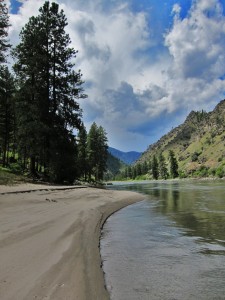
    Don’t be afraid!river toilet

    Today we actually bring toilet seats, so you don’t have to rock the grooves (unless you want to of course). There are many companies that make different varieties of boxes, so not everyone still uses military rocket boxes. The Groover usually secures the most private and gorgeous spot in camp, ‘a poop with a view’. And the view changes every day!

    Why a portable toilet?

    On the Middle Fork of the Salmon, approximately 10,000 people travel down the river a YEAR. This is true for many other rivers in the country as well. With such large numbers of visitors, it would be challenging and costly to install, maintain and monitor toilets at every campsite. Therefore it has become common practice to “Pack it in and Pack it out”, which applies to ALL waste. Now whether it’s a National Park, Forest Service or BLM, mandatory pack list items for a river trip include a portable toilet.

    Infatuation?

    I don’t know why it is but everyone is infatuated with the groover. I think people are just infatuated with pooping in general, I mean there are numerous children’s books including “Everyone poops”, “Everybody poos” and “Where is the poo?”. There are even children’s toys now called Dino poops where you push down on the butt of the Dinosaur and it poops out jelly beans. And on the river, the most talkgroovered about system is ‘The Groover’. There have been numerous songs, poems, and stories written about it, as well as multiple volumes of books. There have even been calendars and coffee table books made with pictures of the most scenic groover sites, butts not included!

    Curious…..

    Come try it out. Don’t be afraid. The views are priceless!


  8. Why is it called ‘The River of NO Return’?

    Comments Off on Why is it called ‘The River of NO Return’?

    And what is a sweep scow or sweep boat?

    Here is a brief history of BOTH.

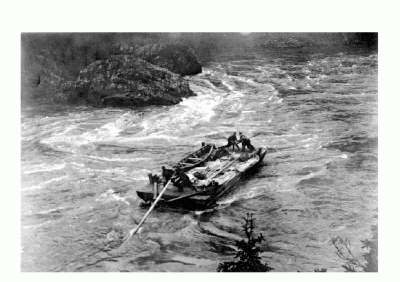
    The story begins in the mid-1800s when the gold rush flooded Idaho and the banks of the Salmon River. As miners infiltrated what’s now known as the Frank Church Wilderness, communities developed, towns grew and the cities of Lewiston and Clarkston flourished. With the growing demand for lumber, entrepreneurial men capitalized on the use of the Mighty Main Salmon to transport lumber. Due to the wild nature of the river strewn with rapids, boulders and hundreds of miles of twists and turns, simply floating logs from one location to another was out of the question. Having migrated west from the banks of the Mississippi, men with the familiarity of flatboats and their ability to transport huge loads, gave birth to the creation of the sweep scow. A large wooden boat with a flat bottom, ranging in length from 26′ to 38′. Built with a double hull these boats could carry up to 3 or 4 tons and only draw 14 inches of water. The sweep scow was driven by 2 men, one man on each scow, which protruSweep boat middle fork salmonded off of the bow and stern. Each scow averaged in length of about 22′.

    Each boat was hand-built out of green lumber, then loaded with logs and driven downstream from Salmon City to Shoup, Riggins or Lewiston (hopefully, if no carnage prevailed along the way). Upon arrival, the load of lumber was sold, the sweep scow was dismantled and then also sold as lumber. Then the hardiest of men would voyage back to Salmon City and start the whole process again. Thus naming the Salmon ‘The River of no Return’, for the boats would never return.

    Modern Day

    Today, companies use sweep boats to transport big loads down the Middle Fork of the Salmon. The Middle Fork is a low volume tributary to the much larger Main Salmon. In an effort to disperse the heavy loads of a 30 person, 6-day trip, it is necessary to use sweep boats as cargo rafts. The heavier they are the better they track and drive, thus lightening the loads of the passenger crafts. Today’s sweeps are driven by one river guide, average in length of about 22′ and are inflatable rafts. Typically the sweep will leave camp before the group and go straight to camp. The Middle Fork, the Main Salmon and the Rogue River in Oregon are the few rivers that still have sweep boats in operation.

  9. Free-Flowing Rivers

    Comments Off on Free-Flowing Rivers

    The annual guessing game of a free-flowing river…..


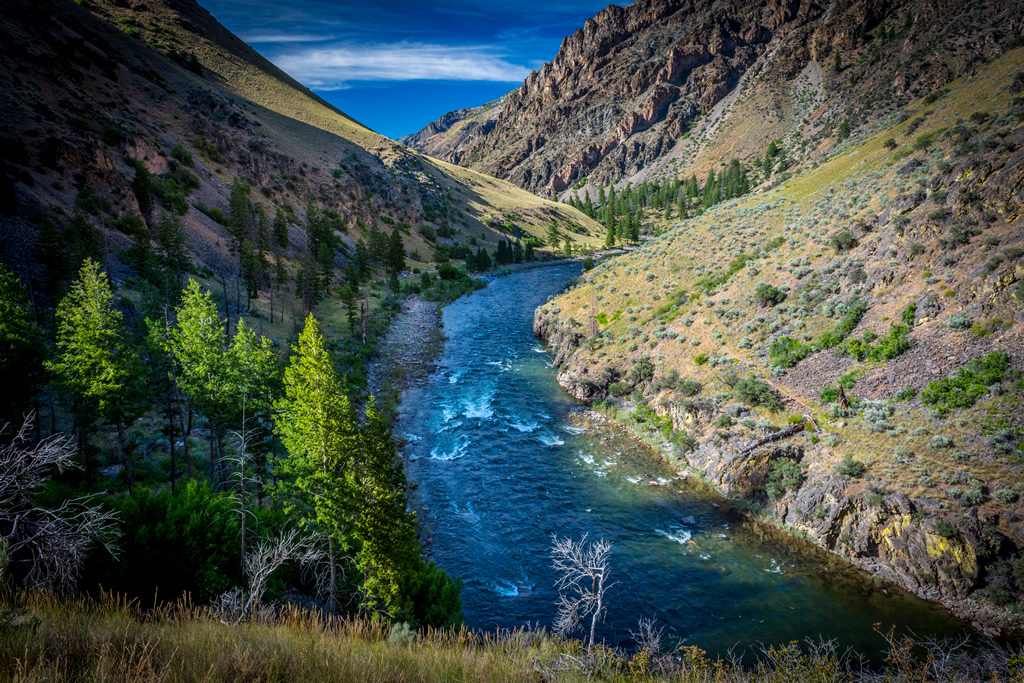
    One of the coolest things about a free-flowing river like the Middle Fork of the Salmon or the Main Salmon is that we never know exactly how mother nature will shed her water each year. The Middle Fork travels approximately 104 miles due north, through the largest wilderness area in the lower 48 states, the Frank Church Wilderness of No Return. On that journey, it drops 3,000 feet vertically. Starting at 6,280’ elevation and converging with the Main Salmon at 3,027′ elevation, the landscape changes from a high alpine forest to a high alpine desert. Along its course, over 100 creeks and springs feed the Middle Fork, increasing its volume 2-3 fold by the confluence with the Main Salmon. Therefore, predicting when and at what elevation all of the snow will melt off each year, is a bit tricky.

    Spring Runoff

    Due to the 3000′ elevation variance, the lower elevation snow tends to come off early and rather quickly, especially when coupled with major rain events, such as rain-on-snow. In 2010, Team Canyons was on the river for an early-season training trip when a rain-on-snow event caused the river to rise from 3 feet to nearly 9 feet in just over 24 hours. This was a historic event, due to the rapidity of this natural shed. Generally, upper drainages are slower to run off and can still be collecting snow well into June.

    This year… the verdict is still out. Check out the current percentages here: Banner summit.

    Early Season Logistics

    One of the biggest things that can affect our logistics is whether the snowpack will hang out in the high country or create avalanches that block the road access into Boundary Creek, the put-in for the Middle Fork. If the road is closed on June 1st, then we have to launch from Indian Creek guard station, a point 25 miles downstream, that is only accessible by small backcountry planes. When this happens, and at low water as well, we use nearly 7 planeloads just to get our gear into the wilderness. This requires breaking down all of our frames and packing oars, coolers, boxes, kayaks and even our giant 18 and 22-foot boats, into small planes.

    High Volume

    On the Main Salmon at high water, one can expect a fast, high volume, swirly river that rivals other great rivers of the west, in technicality and excitement, such as the Grand Canyon and Cataract Canyon. Our early June Main Salmon trips can be high adventure and super exciting if the spring runoff is big. This time of year is a great option for guests who have been on a river trip before. If the river volume exceeds our top-end cutoff, we will cancel (reschedule) a trip for safety reasons.

    Watching and predicting the spring runoff is always exciting for river runners. We look forward to the excitement, the cleansing, and the anticipation. Stay tuned to see how this year’s water levels pan out. You can check our website for current levels on both the Middle Fork of the Salmon and the Main Salmon here: River Levels

    High water is fast and fun and a bit on the chilly side. We highly recommend that you wear a drysuit (you can rent or purchase one online). If you are an adrenaline junkie, the early season might be a good choice for you!