


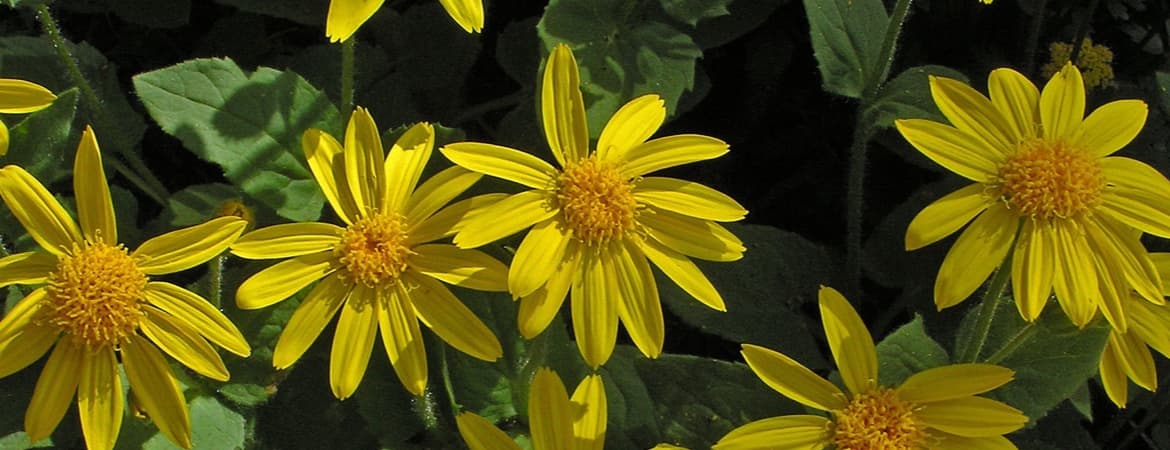
Heart-Leaf Arnica
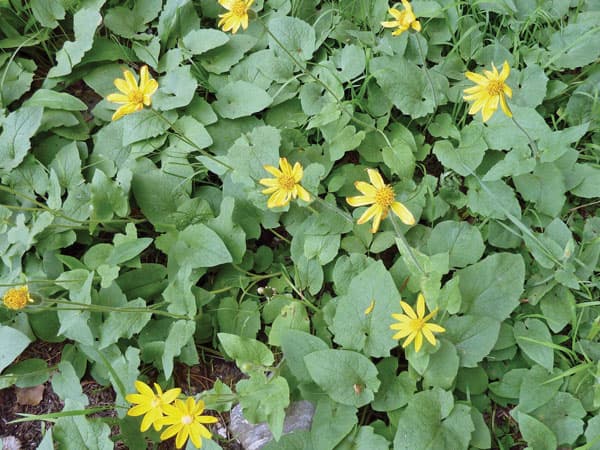 There is perhaps nothing on shore that delights me more than a medicinal plant, and the Salmon River drainage is absolutely teeming with natural medicine. There are Cottonwood trees and Ponderosa pines, there is Serviceberry and Rabbitbrush, there is Syringa and Fireweed. And there is Heart-leaf Arnica.Arnica is a delight. It is among the first wildflowers to appear after the snowmelt—after the edible Glacier Lily and alongside the edible and medicinal Arrowleaf Balsamroot. Its yearly bloom can show itself as early as April at lower elevations and, in high alpine places, linger into late summer. The flowers are fragrant but not floral; they smell like herbal medicine.
Though, don’t let yourself be confused. There are several species of Arnica, not all of which are traditionally used in the same way. Heart-leaf Arnica is easily recognized by its heart-shaped basal leaves and its distinct medicinal scent, which becomes apparent when the flowers are handled.
Heart-leaf Arnica is intended for external use only, and even then its potent medicine can be an irritant for sensitive skin. It should not be applied to broken skin. Traditionally, it is used as an anti-inflammatory: the flower heads can be gently mashed into oil, and that oil applied to bruises and to inflamed joints or muscles.
And if you’re ever on the river with me, Auri East, during a Heart-leaf Arnica harvest, I’ll take you along. It is, of course, the safest and best way to learn old medicine—through careful attention, proper identification, and time spent in the place itself.
Written by: Auri East
Source: Plant First Aid Along the Salmon River by Darcy Williamson
Similar Posts by The Author:
- Off Beat Interview Series with Ensi Armacost
- Off Beat Interview Series with Jasmine
- Off Beat Interview Series with Sanne Hilbrich
- Off Beat Interview Series with Mike Hipsher
- The Interior Guide: How to Actually Show Up for Yourself this River Trip